Unit 6.1 Need for Classification
Biology → Biology → CLASSIFICATION → CLASSIFICATION → Classification & Taxonomy | Author: admin | Feb 24, 2026
Need for Classification The Earth hosts an enormous diversity of living organisms, with millions of species estimated (though only about 1.7–2 million identified so far). These range from microscopic bacteria to giant trees and whales, varying in size, shape, habitat, mode of nutrition, reproduction, and other features. Studying each organism individually is impossible due to this vast variety. Classification organizes organisms into groups based on shared similarities and differences, making the study systematic, convenient, and meaningful.
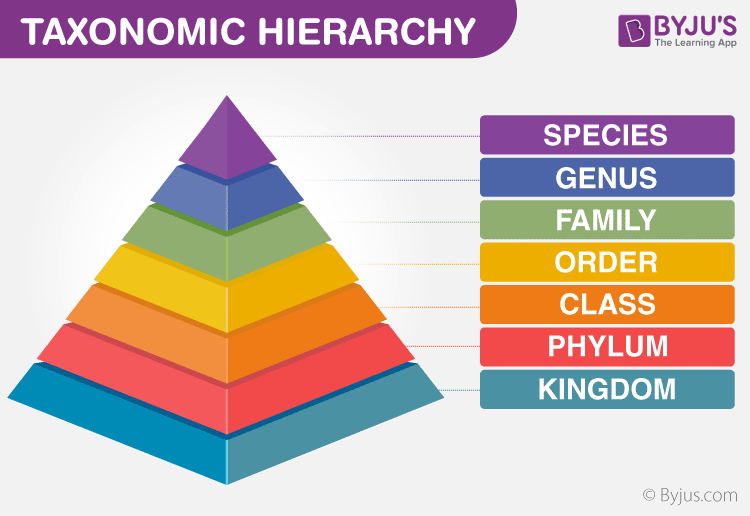
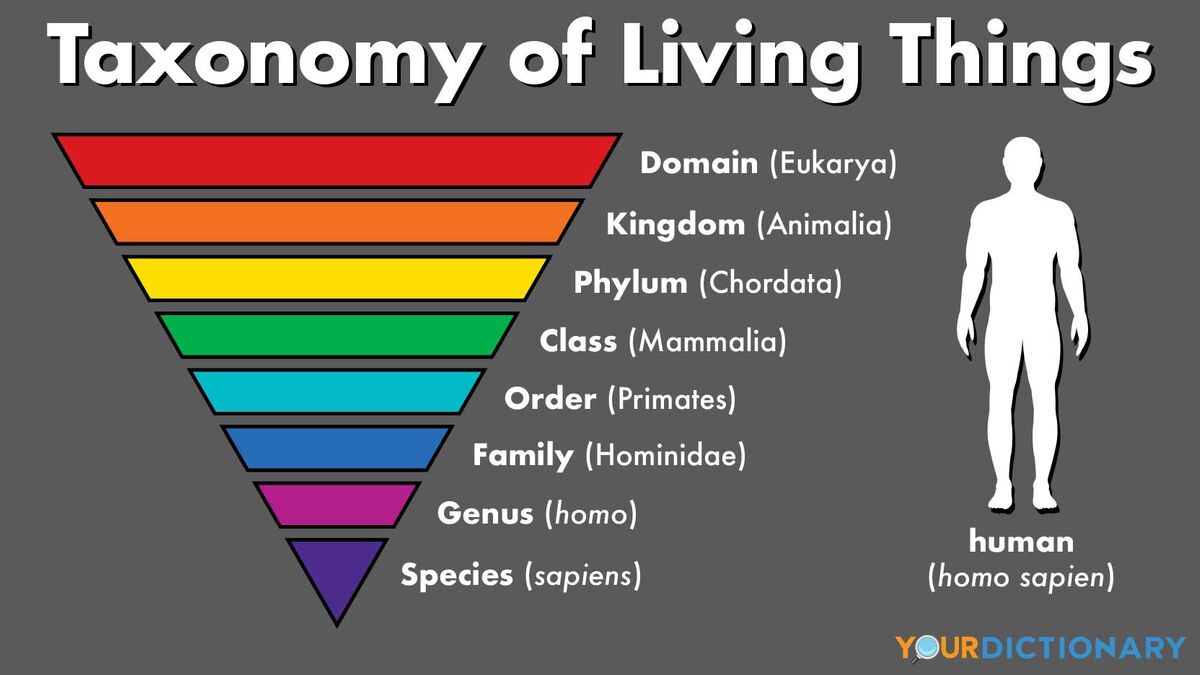
What is Classification? Classification (or taxonomy) is the scientific process of arranging living organisms into groups or categories (taxa) based on observable characteristics and evolutionary relationships. It starts from broad groups (like kingdoms) to specific ones (like species). This hierarchical arrangement reflects fundamental similarities while highlighting diversity.
Why Classification is Necessary
- Ease of Study and Identification: Grouping similar organisms allows studying one representative to understand features of the entire group. It avoids confusion from local/common names that vary by region/language (e.g., the same plant may have different names in different states).
- Scientific Naming and Communication: Provides a universal system (binomial nomenclature by Linnaeus) for accurate identification worldwide, preventing mix-ups.
- Understanding Relationships: Reveals similarities/differences, evolutionary links (phylogeny), and how organisms are related (e.g., humans closer to monkeys than cows).
- Studying Diversity and Evolution: Helps trace evolutionary history, as closely related groups share ancient traits; aids in discovering new species and understanding biodiversity changes.
- Practical Applications: Supports fields like agriculture (crop improvement), medicine (drug sources from plants/animals), conservation (protecting endangered species), and ecology (ecosystem studies).
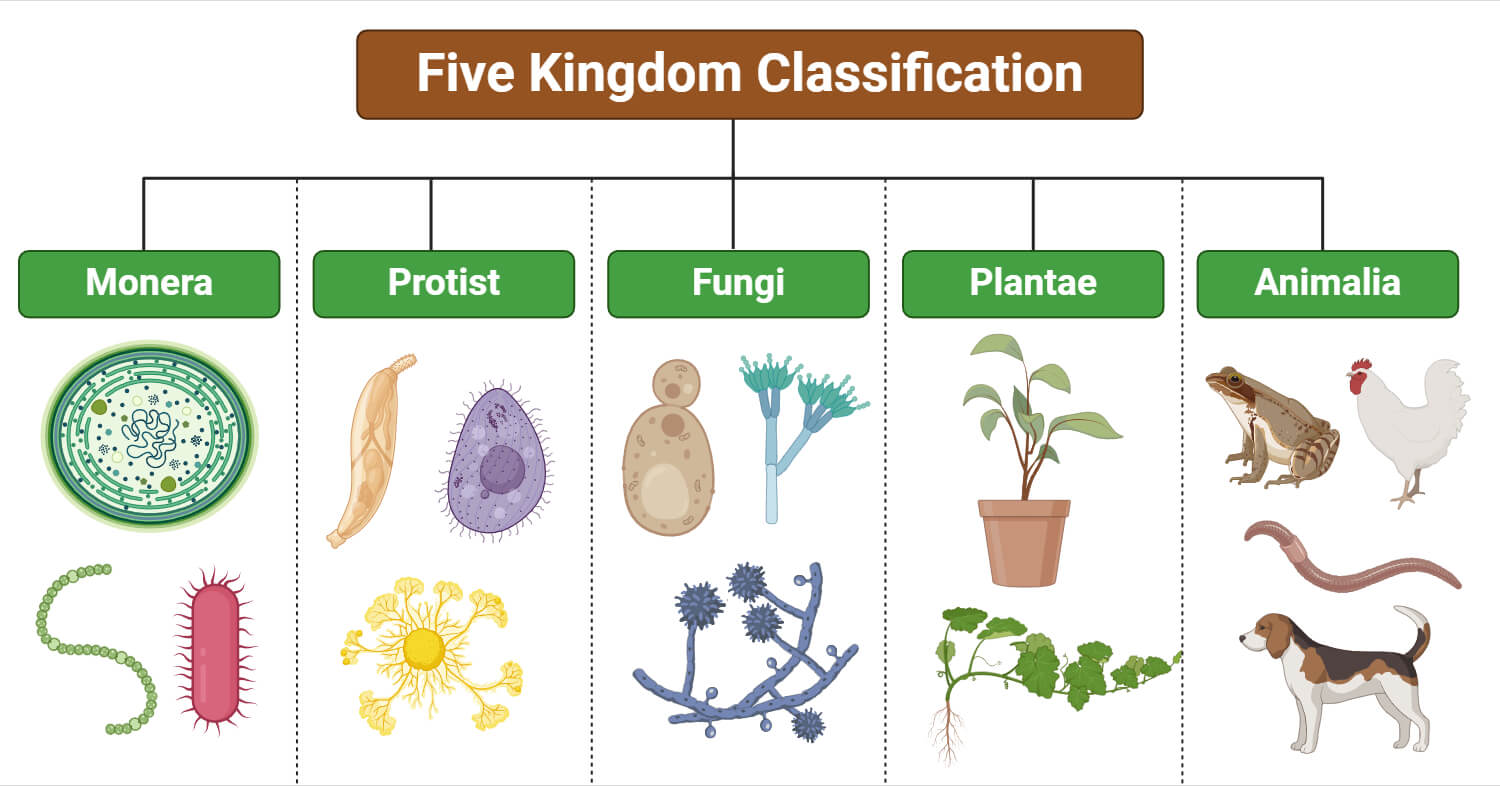
Historical Context (NCERT Perspective) Early classifications were artificial (based on few traits, like plants vs animals by Aristotle/Linnaeus's two-kingdom system). Over time, limitations emerged (e.g., viruses, bacteria didn't fit; ignored cell structure/nutrition). This led to natural and phylogenetic systems, culminating in Whittaker's five-kingdom classification (Monera, Protista, Fungi, Plantae, Animalia) based on cell type, organization, nutrition, reproduction, and phylogeny. Systems evolve with new evidence (e.g., three-domain system separating Archaea/Bacteria).
:max_bytes(150000):strip_icc()/three_domain_system-57c48baa3df78cc16eb59931.jpg)
Section 2: Quick Revision, Exam Tips, and Traps
Quick Revision Points
- Classification: Grouping organisms based on similarities/differences for easy study.
- Need: Vast diversity makes individual study impossible; enables identification, universal naming, relationship understanding, evolutionary insights, practical uses (medicine, agriculture).
- Early systems: Two-kingdom (Plantae-Animalia) inadequate due to ignoring cell structure, nutrition, prokaryotes/eukaryotes.
- Modern basis: Cell type (prokaryotic/eukaryotic), body organization, nutrition mode, reproduction, phylogeny.
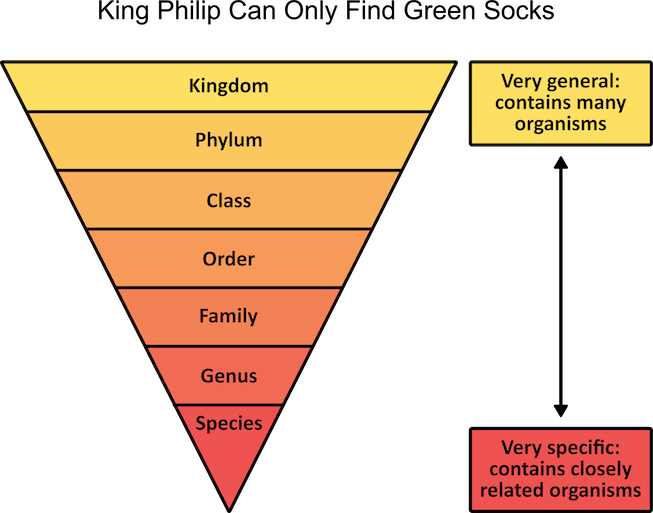
- Hierarchy example: Kingdom → Phylum/Division → Class → Order → Family → Genus → Species (broad to specific).

Exam Tips
- Quote NCERT lines: "Classification makes the study of organisms easy and convenient" and "helps in exploring the diversity of life forms."
- Use examples: Tiger/peacock names vary regionally → binomial nomenclature solves this.
- Draw hierarchy pyramid (Kingdom at base/top, Species at tip) with labels; mention mnemonic like "King Philip Came Over For Good Soup."
- For UPSC/SSC/RRB/TGPSC: Link to biodiversity conservation, evolution evidence; note classification changes with new data (e.g., five to three domains).
- Tabular comparison: Artificial vs Natural vs Phylogenetic systems (artificial: few traits; natural: many traits; phylogenetic: evolutionary).
Common Traps to Avoid
- Trap: Saying classification is only for naming → Wrong; it's for study, relationships, evolution too.
- Trap: Confusing two-kingdom as current → It's outdated; NCERT emphasizes five-kingdom and changes over time.
- Trap: Ignoring need for universal names → Local names cause confusion across regions/languages.
- Trap: Stating classification is static → Systems change with better understanding (e.g., cell structure inclusion).
- Trap: Mixing with nomenclature only → Nomenclature is part; classification includes grouping/hierarchy.
Section 3: Previous Asked Questions-Answers and Expected Questions-Answers
Previous/Frequently Asked Questions (NCERT-based, Competitive Style)
- Why are living organisms classified? Answer: To make study easy/convenient, identify varieties correctly, understand similarities/differences, establish evolutionary relationships, and explore biodiversity systematically (NCERT: avoids studying millions individually; groups similar ones).
- What is the need for classification of living beings? Answer: Due to enormous diversity in form, size, habitat; classification groups similar organisms, enables study of groups, provides universal scientific names, reveals evolutionary links, aids practical applications like conservation/medicine.
- Why have classification systems changed over time? Answer: Earlier systems (e.g., two-kingdom) inadequate as they ignored cell structure, nutrition, phylogeny; new criteria (cell type, body organization) and evidence led to five-kingdom and domain systems.
Expected Questions (High Probability for 2026 Exams)
- Explain the need for classification of living organisms with examples (4–5 marks). Expected: Diversity vast → impossible to study individually; eases identification (e.g., regional name confusion), universal naming, relationships (e.g., humans-monkeys closer), evolution study, biodiversity understanding.
- Why do classification systems undergo changes? Give reasons (UPSC/SSC style). Expected: Based on new characteristics (cell wall, nutrition, phylogeny); two-kingdom inadequate for prokaryotes/unicellular; Whittaker's five-kingdom better; future changes possible.
- Discuss how classification helps in studying biodiversity and evolution (short note). Expected: Groups similar organisms → study representatives; phylogenetic classification shows evolutionary descent; reveals ancient/modern traits.
- Differentiate between the aims of artificial and natural classification (tabular). Expected: Artificial (few convenient traits, e.g., early systems); Natural (many comparable traits, relationships); Phylogenetic (evolutionary history).
- State the importance of taxonomy in modern biology (competitive exams). Expected: Identification/naming, biodiversity documentation, conservation, evolutionary studies, applied fields (agriculture, medicine).